Presence as Practice: How a New Generation of Artists Is Building Livelihoods Around Experience, Not Objects
For much of the twentieth century, the dominant mythology of the working artist in America followed a fairly predictable arc: produce, exhibit, sell, repeat. Success was measured in gallery placements, auction records, and the slow accumulation of a collector base willing to pay for tangible objects. That model, while still operative for some, is no longer the only viable path — and for a growing number of practitioners, it is no longer even the preferred one.
What is emerging in its place is something more relational, more durational, and arguably more honest about the nature of creative labor itself. Call it the ritual economy of artistic presence: a framework in which the artist's knowledge, attention, and embodied practice become the primary currency of exchange.
The Shift From Object to Encounter
The transition did not happen overnight, nor did it emerge from a single ideological movement. Rather, it has accumulated through thousands of individual decisions made by artists confronting the practical realities of a market that remains structurally inaccessible to most. Gallery representation remains concentrated in a handful of major metropolitan centers. The secondary market rewards established names. And the economics of studio production — materials, space, time — are increasingly untenable in cities where rents have made creative work a privilege rather than a vocation.
Faced with these conditions, many artists have turned inward, toward the practice itself, and asked a fundamental question: what is it that I actually know, and who might benefit from being in the room with me while I work?
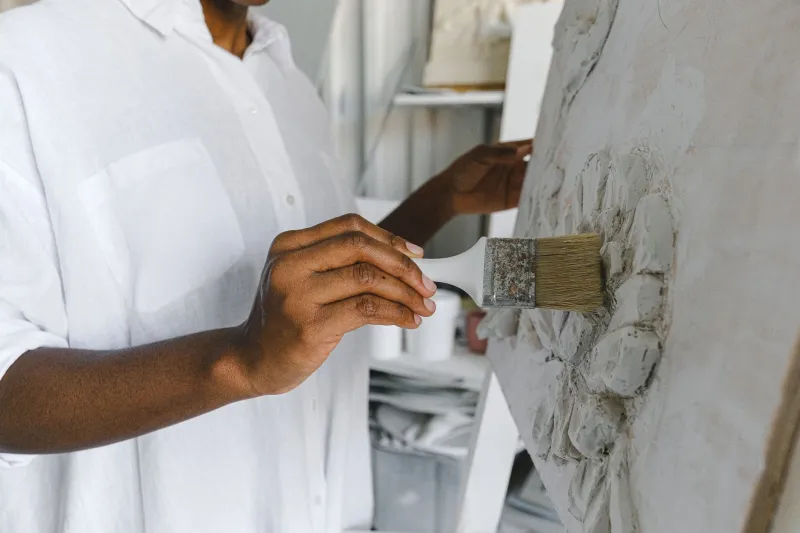
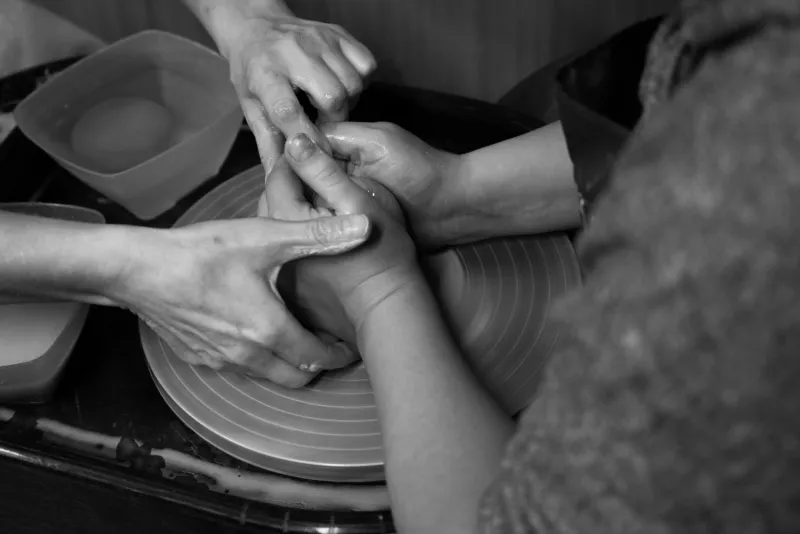
The answers have generated a remarkable variety of economic forms. In Portland, Oregon, a ceramicist who once relied almost exclusively on gallery sales now runs a subscription-based studio membership program, offering monthly participants access to her workspace, her techniques, and her ongoing critical dialogue. In Atlanta, a muralist has built a thriving curriculum of neighborhood-based workshops that combine public art history with hands-on collaborative production. In Chicago, a printmaker has structured her entire practice around a tiered mentorship model, charging premium rates for one-on-one sessions while offering sliding-scale group intensives to emerging artists from under-resourced communities.
What Participants Are Actually Buying
It would be reductive to describe this shift simply as artists "teaching on the side." What distinguishes the ritual economy from conventional arts education is the quality of intimacy and specificity it offers. Participants are not enrolling in a generalized course on technique. They are purchasing proximity to a particular sensibility — the chance to observe how a specific mind navigates uncertainty, solves formal problems, and sustains a creative life over time.
This is, in essence, the transmission of tacit knowledge: the kind that cannot be adequately conveyed through a video tutorial or a published monograph. It requires physical co-presence, shared time, and the willingness to be seen in the midst of not-yet-knowing.
Several artists interviewed for this piece described the experience of leading workshops or demonstrations as unexpectedly generative for their own practice. Rather than depleting creative energy, the act of articulating process — of making visible what is normally interior — has pushed their work into new territory. The pedagogical encounter, it turns out, is not merely a revenue stream. It is itself a form of creative inquiry.
Residencies, Collaborations, and the Architecture of Sustained Presence
Beyond individual workshops and mentorship arrangements, the ritual economy has also reshaped the role of artist residencies in the United States. Increasingly, residency programs are being designed not simply as retreats for isolated production, but as participatory structures in which the artist's presence becomes a resource for the surrounding community.
Organizations such as the Headlands Center for the Arts in California and the Ox-Bow School of Art in Michigan have long experimented with models that blur the boundary between resident and educator. But newer initiatives — many of them artist-founded and community-rooted — are pushing this further, building residencies around live demonstration series, open studio hours, and collaborative fabrication projects that invite public participation as a constitutive element of the work itself.
These structures reflect a broader reconceptualization of what creative presence can offer. The artist is no longer positioned solely as producer of a finished artifact to be contemplated from a respectful distance. She is instead a practitioner whose ongoing engagement with materials, ideas, and community constitutes the work — and whose willingness to make that engagement visible and accessible is itself a form of cultural contribution.
The Economics in Practice
For all its philosophical coherence, the ritual economy demands rigorous practical thinking. Artists who have successfully built careers around presence and experience are, without exception, highly intentional about the structures they create and the rates they charge.
Many have found that transparent pricing, clearly articulated value propositions, and a willingness to name their expertise without apology are essential to making the model work. The cultural discomfort that artists often feel around discussing money — a discomfort with deep roots in romantic ideologies of creative selflessness — must be actively confronted and overcome.
Several practitioners have also noted the importance of diversifying across multiple formats: a combination of high-touch, premium-priced individual mentorship; mid-range group workshops; and lower-cost or subsidized offerings for participants who could not otherwise access their work. This tiered approach allows artists to sustain economic viability while remaining committed to values of access and equity — a balance that feels particularly urgent in the current cultural moment.
Toward a New Definition of the Working Artist
What the ritual economy ultimately proposes is a reconsideration of the very category of artistic labor. If presence, knowledge, and relational engagement are legitimate forms of creative production — and the evidence strongly suggests they are — then the artist who builds a career around these capacities is not somehow less serious or less committed than one who depends exclusively on object sales. She may, in fact, be more fully engaged with the social dimensions of what art is and does.
This is not a rejection of the art object. Many of the artists working within this framework continue to make and exhibit and occasionally sell finished work. But they have refused to allow the object to stand as the sole measure of their creative worth or their economic viability.
In doing so, they are building something more durable than a market position: a practice rooted in genuine exchange, sustained by community, and capable of adapting to the shifting conditions of creative life in America. That, perhaps, is the most vital artistic statement of all.