The Art of the Unresolved: How American Artists Are Making Incompleteness Their Medium
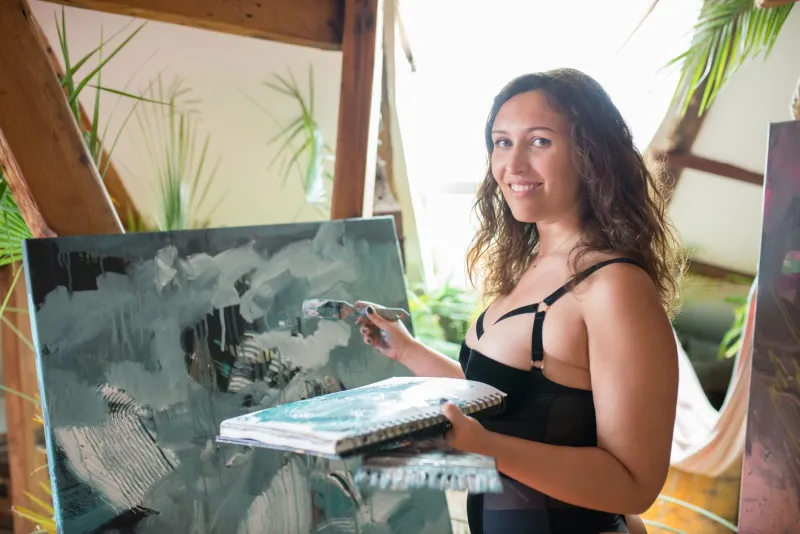
There is a particular kind of discomfort that arises when one stands before a painting whose edges trail off into raw canvas, or a sculpture that appears mid-collapse, or a performance that ends without resolution. For much of Western art history, that discomfort was considered a failure — evidence that the artist had not yet arrived at mastery. Today, for a significant and expanding cohort of American artists, that discomfort is precisely the point.
Across studios, galleries, and alternative art spaces from Brooklyn to Albuquerque, a deliberate aesthetic philosophy is taking shape: one that treats incompleteness not as a deficit but as a form of radical honesty. These artists are not simply leaving things unfinished out of haste or indifference. They are making an argument — about labor, about commodification, about the violence of the polished surface — and they are making it loudly, in the language of the unresolved.
The Pressure Behind the Polish
To understand why incompleteness has become such a compelling statement, one must first reckon with the pressures that demand its opposite. The contemporary American art market — with its auction cycles, its art fair calendars, its Instagram-ready aesthetics — exerts enormous force on artists to produce objects that are legible, transportable, and sellable. A work that resists easy categorization, that refuses to present itself as a finished commodity, is a work that challenges the entire apparatus of how art gets valued and exchanged.
For many artists, particularly those working outside of well-resourced institutional frameworks, the demand for polished, market-ready output has felt increasingly suffocating. The finished work, in this context, is not merely an aesthetic endpoint — it is a capitulation. It signals that the artist has consented to the transformation of their practice into product.
"There's something deeply political about the sketch," says one New York-based painter whose large-scale canvases deliberately preserve pentimento — the visible traces of earlier compositional decisions — alongside areas of dense, resolved color. "When you can see the process, you can see the thinking. And thinking is not something the market knows how to price."
Process as Subject Matter
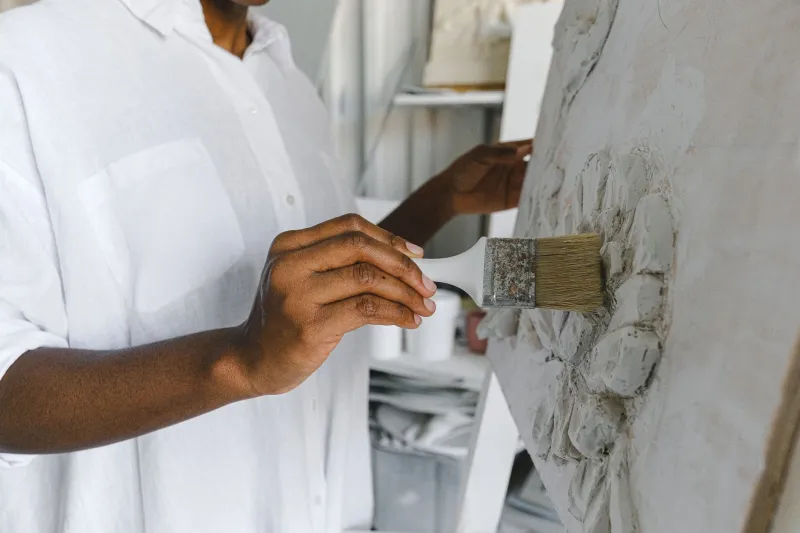
What distinguishes the current moment from earlier process-art movements — the Arte Povera practitioners, the post-minimalists of the 1960s and 70s — is the degree to which today's artists are making the experience of making the explicit subject of their work, rather than simply foregrounding materials or methods.
In Chicago, a collective of interdisciplinary artists has been staging what they call "durational drafts" — public working sessions in which audiences are invited to witness works being made, remade, and sometimes actively dismantled. Nothing presented in these sessions is offered as final. Visitors leave without the satisfaction of resolution. The collective argues that this refusal to conclude is, in itself, the artwork.
Similarly, in Los Angeles, several ceramicists have been exhibiting pieces that are visibly cracked, warped, or structurally compromised — objects that would traditionally have been discarded before reaching a gallery floor. By presenting these works not as failures but as documents of process, they invite a reassessment of what ceramics, as a discipline, has historically demanded: perfection of surface, mastery of form, the erasure of struggle.
Fragmentation as Formal Language
Incompleteness, in the hands of these artists, is not a single gesture but a whole vocabulary. Some work in fragments — producing series of related objects or images that refuse to cohere into a unified whole, insisting instead on the productive tension between parts. Others embrace the provisional: works assembled from temporary materials, or presented in configurations that shift between exhibitions, denying the fixity that collectors and institutions typically require.
There is also a growing interest in what might be called the aesthetics of interruption — works that appear to have been abandoned mid-gesture, as though the artist walked away in the middle of a sentence. This particular mode carries a specific emotional charge. It evokes not only the contingency of creative work but also the countless interruptions — economic, personal, systemic — that shape the lives of working artists in America. For artists of color, for artists navigating disability, for artists holding down multiple jobs to sustain their practice, the interrupted work is not a stylistic choice so much as an autobiography.
What Audiences Are Being Asked to Do
Perhaps the most significant dimension of this movement is the demand it places on viewers. A finished work, in the traditional sense, asks relatively little of its audience: it presents itself as complete, and the viewer's task is largely one of reception and interpretation. An unfinished work — one that is visibly in progress, visibly uncertain, visibly scarred by the conditions of its making — asks something more strenuous.
It asks the viewer to participate in the act of meaning-making without the comfort of resolution. It asks them to sit with ambiguity, to resist the impulse to close the loop, to accept that some of the most significant things that can be said about creative life cannot be said in the language of the polished and the perfected.
This is, in its own way, a deeply generous act. By refusing to deliver a tidy conclusion, these artists are extending an invitation: into the studio, into the struggle, into the ongoing and unresolved nature of creative practice itself.
The Question of Value
None of this is without tension. The art world's infrastructure — its galleries, its grant systems, its critical apparatus — remains largely organized around the finished object. Artists who commit to incompleteness as a formal and philosophical stance often find themselves navigating a market that has not yet developed the language to accommodate them.
And yet there are signs that this is shifting. Several prominent American museums have begun acquiring works that are explicitly provisional — objects accompanied by documentation that acknowledges their ongoing, mutable nature. Critics are developing new frameworks for evaluating works whose value lies not in resolution but in the quality of their openness.
What is becoming increasingly clear is that incompleteness, far from being a marginal or eccentric position, speaks to something essential about the current cultural moment. In an era defined by fracture, by uncertainty, by the collapse of old certainties and the slow, difficult emergence of new ones, art that refuses the false comfort of the finished surface may be the most truthful art of all.
The unresolved work does not promise answers. It promises, instead, something rarer and more difficult: the ongoing presence of the question.