After the Silence: How Established Artists Are Finding Their Way Back to a Deeper Creative Practice
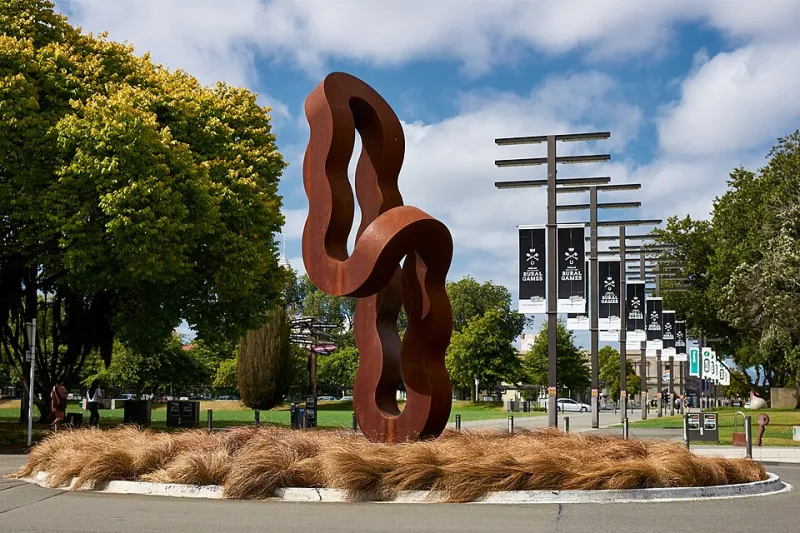
Photo: Geoff McKay, CC BY 2.0, via Wikimedia Commons
There is a particular kind of exhaustion that arrives not at the beginning of a creative career, but somewhere in the middle of it — when the exhibitions have stacked up, the residencies have come and gone, and the work that once felt urgent begins to feel like obligation. For many mid-career artists across the United States, this moment of reckoning is less a crisis than an invitation: an opportunity to step back, reassess, and return to their practice with a clarity that younger, less tested versions of themselves could not have possessed.
The cultural conversation around burnout has expanded considerably in recent years, yet it has largely centered on the overworked professional or the early-career artist struggling to break through. What receives far less attention is the experience of the established artist — the painter with a solid gallery relationship, the novelist with two published books, the choreographer with a regional company — who one day finds that the well has gone dry. Their silence is often misread as irrelevance. More often, it is the precondition for something richer.
The Myth of Perpetual Output
American cultural institutions have long operated on an implicit assumption: that productivity is the primary measure of an artist's vitality. Grant applications ask for recent work. Residency programs favor those with momentum. Critics write about what is new. This relentless orientation toward the present tense places enormous pressure on working artists to remain continuously visible, even when the most honest creative response to a given moment might be stillness.
Several mid-career artists interviewed for this piece described the moment they first allowed themselves to stop — truly stop — as both terrifying and liberating. A Chicago-based visual artist who spent nearly two decades producing large-scale installations described taking an unplanned eight-month sabbatical after a major commission left her feeling, in her words, "hollowed out and performing." She did not announce the break. She simply stepped away from her studio, traveled to visit family in New Mexico, and read voraciously. When she returned to her practice, she found herself working at a smaller scale, with materials she had never previously considered. The resulting body of work was, by her own account and that of her peers, among the most emotionally honest she had ever produced.
The sabbatical — formal or informal — has emerged as one of the most frequently cited tools among artists navigating this kind of creative renewal. Unlike a vacation, a sabbatical is understood to be purposeful in its very purposelessness. It creates space for the unconscious work that sustained artistic practice requires but rarely acknowledges.
Cross-Disciplinary Collisions
For others, the path back has run not through solitude but through unexpected collaboration. A number of established artists have found that engaging with disciplines adjacent to their own — or entirely foreign to it — has served as a kind of creative defibrillator.
A poet based in the Pacific Northwest, whose first two collections earned significant critical recognition, described spending a year embedded with a dance company in Portland as the pivot point in her recovery from what she calls "the silence after praise." The experience of working with the body in space, of translating language into movement and back again, introduced her to problems she had never before encountered. The friction was generative. Her third collection, which emerged from that collaboration, moved in directions her earlier work had not dared to explore.
This kind of cross-disciplinary exchange is increasingly being facilitated by arts organizations that recognize the particular needs of mid-career practitioners — artists who are neither emerging nor elder, and who often fall through the gaps in traditional support structures. Programs like those offered by certain regional arts councils and independent foundations have begun to design residencies and fellowships specifically for artists at this stage, pairing visual artists with composers, playwrights with architects, choreographers with writers.
The Role of Mentorship — Given and Received
One of the more counterintuitive strategies that recurs in conversations with returning artists is the role of mentorship — not as recipients, but as providers. Several practitioners described the act of working closely with younger artists as unexpectedly restorative to their own creative sense of purpose.
A sculptor based in Philadelphia who spent three years largely absent from her practice found renewed energy after agreeing, somewhat reluctantly, to lead a series of workshops at a community arts center in her neighborhood. The experience of articulating her own process — of being asked to explain why she made the choices she made — forced her to reconnect with the foundational values that had drawn her to the work in the first place. "I had forgotten why I started," she reflected. "Teaching made me remember."
This dynamic — in which giving becomes a form of receiving — speaks to a broader psychological shift that many mid-career artists describe as central to their renewal. The competitive, individualistic framework that often governs professional artistic life begins to feel less compelling than a more relational understanding of creative work, one rooted in community and continuity rather than singular achievement.
Redefining the Metrics
Perhaps the most profound transformation that returning artists describe is a fundamental renegotiation of what success means to them. The external markers that once organized their ambitions — gallery representation, critical coverage, institutional recognition — recede in importance, replaced by a more interior set of standards.
This is not resignation. It is, rather, a form of maturity that the art world rarely celebrates but perhaps should. The artist who returns from a period of withdrawal often does so with a surer sense of their own voice, a greater willingness to take risks that do not guarantee approval, and a deeper relationship to the material conditions of their craft.
For audiences, this shift tends to be perceptible. There is a quality in the work of an artist who has passed through silence and returned — a density of intention, a willingness to sit with difficulty — that distinguishes it from work produced under the pressure of perpetual momentum.
At Luisa Futoransky Arts, we have long believed that creativity is not a sprint but a conversation — one that unfolds across decades, through periods of abundance and scarcity alike. The artists who endure are not necessarily those who produce the most, but those who find ways to remain genuinely curious about their own practice, even — perhaps especially — when that curiosity leads them somewhere unfamiliar and quiet.
The comeback, it turns out, is not a return to what came before. It is an arrival somewhere new.