Scroll, Create, Sell: The Gen Z Artists Remaking the Art World From the Ground Up
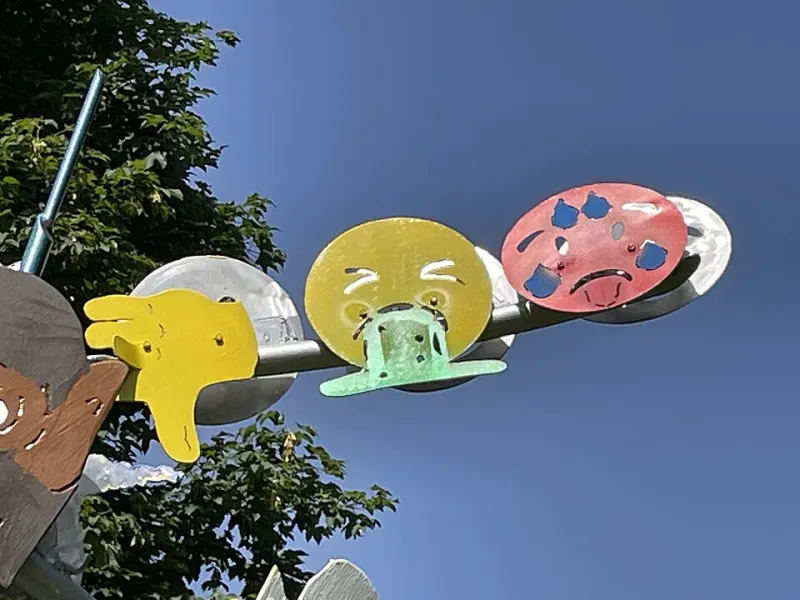
Photo: Mo-metallkunst, CC BY 4.0, via Wikimedia Commons
The Gatekeepers Are Losing Their Keys
The traditional art market has long operated on a system of controlled scarcity—of access, of visibility, of validation. A young artist's path to recognition ran, almost without exception, through a series of institutional checkpoints: the prestigious MFA program, the group show at an emerging gallery, the favorable review in the right publication, the representation by a respected dealer. Each step conferred legitimacy. Each step also conferred exclusion on the vast majority who could not navigate or afford the journey.
Gen Z artists, many of whom came of age watching that system reward the already-advantaged while overlooking voices that did not fit its aesthetic or social profile, have largely declined to seek its approval. Instead, they have built something else entirely—and the speed and scale of what they have constructed has left the establishment scrambling to understand what happened.
TikTok, Instagram Reels, YouTube, and Substack have become the new galleries, the new critics, and the new dealers for a generation that sees no meaningful distinction between a work's artistic merit and its capacity to generate genuine connection with an audience.
Who These Artists Are
They are not a monolith, and it would be a disservice to treat them as one. The Gen Z artists reshaping American creative culture include illustrators from rural Mississippi with hundreds of thousands of followers who have never set foot in a New York gallery. They include digital painters in Los Angeles whose work sells as NFTs and as traditional prints with equal facility. They include performance artists in Chicago whose TikTok documentation of their work reaches audiences that the most celebrated performance venues in the country could never assemble in a single room.
What many of them share is a comfort with transparency that older generations of artists were trained to avoid. They show their process. They discuss their pricing. They talk openly about the business of being an artist—the commissions, the licensing deals, the Patreon memberships—in ways that would have been considered gauche or self-promotional in the world their predecessors inhabited. For their audiences, this transparency is not a liability. It is precisely the point.
Artists like Dani Lazo, whose intricate digital illustrations document Latinx cultural memory and have earned her a devoted following across platforms, or Jordan Casteel-adjacent painters building communities through Discord servers and live-streamed studio sessions, represent a new archetype: the artist as community anchor, not solitary genius.
The Tension Between Viral and Venerable
It would be dishonest to present this shift without acknowledging the genuine tensions it produces. The aesthetics that perform well on short-form video platforms—high contrast, immediate emotional legibility, satisfying process reveals—are not always the aesthetics that reward sustained contemplation. Critics and curators who have spent careers developing frameworks for evaluating work that operates on slower, more demanding terms have legitimate questions about what is lost when the scroll replaces the gallery wall.
There is also a real concern about the economics of attention. Platforms that deliver enormous visibility also extract enormous labor—the constant production of content, the management of comments, the performance of accessibility and relatability that social media demands. Some artists who have built substantial digital followings describe a creeping exhaustion, a sense that the platform's appetite for content is difficult to reconcile with the slower rhythms that serious artistic development requires.
And yet the critique that positions virality as antithetical to artistic seriousness deserves scrutiny. Much of what has been enshrined as fine art credibility reflects the tastes of a narrow demographic that controlled the institutions of validation for a very long time. The assumption that work reaching millions of people through digital platforms is inherently less worthy than work reaching hundreds through a Chelsea gallery is an assumption worth examining with considerable care.
What Established Institutions Are Learning
The shrewder cultural institutions have recognized that Gen Z's disruption of the art market is not a threat to be managed but an intelligence to be studied. The questions these young artists are asking—about who art is for, how it should be priced, what relationship an artist owes their audience—are not new questions. They are the oldest questions in the field, asked with new urgency and new tools.
Some museums and galleries have begun experimenting with programming explicitly designed to bridge the digital and physical. The New Museum in New York has hosted exhibitions centered on artists who built their practices online, treating the digital work not as a precursor to the "real" gallery work but as the primary text. The San Francisco Museum of Modern Art's digital programming initiatives have similarly attempted to engage with artists whose primary communities exist on platforms rather than in physical spaces.
These efforts are uneven and sometimes awkward—institutions accustomed to moving slowly do not always translate well to the speed at which digital culture operates. But the direction is correct, and the institutions willing to learn from Gen Z's instincts rather than merely attempting to absorb their audiences will be better positioned for what comes next.
A Market Made in Their Own Image
Perhaps the most consequential thing Gen Z artists have done is demonstrate that a market built on direct relationships with audiences is not only viable but, in some respects, more stable than one built on the approval of intermediaries. When an artist's livelihood depends on the loyalty of a community they have built through genuine engagement rather than institutional endorsement, they possess a form of security that the gallery system has never reliably offered most of its participants.
This is not to suggest that the traditional art market is disappearing. It is not. But its monopoly on legitimacy is over, and the artists who grew up in the age of the algorithm knew it before the institutions did.
At Luisa Futoransky Arts, we find this moment genuinely exhilarating. The expansion of who gets to make art, who gets to sell it, and who gets to decide its value is not a dilution of culture. It is culture doing what it has always done when the conditions are right—breaking the containers that have grown too small for it.