Behind the Curtain: How Performers Are Confronting the Hidden Weight of Creative Life
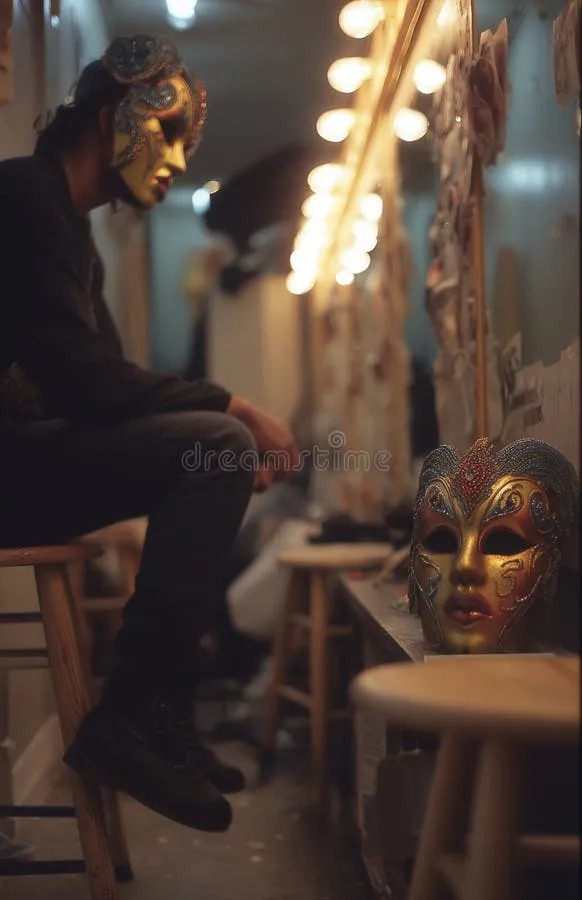
Photo: performer alone backstage theater dressing room quiet moment, via thumbs.dreamstime.com
The applause fades. The house lights rise. The audience files out into the night, carrying with them the warmth of a performance that moved them in ways they may never fully articulate. And the performer — the one who conjured that feeling, who gave it shape and breath and urgency — returns to a dressing room alone.
For many artists, this is the moment no one prepares them for.
The Architecture of Pressure
Performance, by its very nature, is a discipline of extremes. It asks practitioners to be simultaneously vulnerable and controlled, spontaneous and technically precise, emotionally present and professionally resilient. What it rarely accounts for is the cumulative cost of that demand.
Clara Mendes, a contemporary dancer based in Brooklyn who has performed with several celebrated companies over the past decade, describes the experience with quiet candor. "You train your entire life to suppress the noise in your head so you can be present onstage," she says. "But that noise doesn't disappear. It just gets louder when the performance ends and there's nothing left to drown it out."
For Mendes, what began as manageable pre-show anxiety gradually calcified into something more persistent — a low-grade dread that accompanied her through rehearsals, auditions, and eventually into her off-seasons. She is among a growing cohort of performers who are speaking publicly about the psychological terrain of artistic life, a terrain that has historically been navigated in silence.
A Culture That Glorifies Endurance
The performing arts have long maintained an unofficial code: the show must go on, and those who cannot keep pace are perhaps not truly committed. This mythology of endurance — the injured dancer who performs through pain, the musician who plays through grief, the actor who channels personal trauma without professional support — has shaped institutional culture in ways that are only now being critically examined.
Marcos Villanueva, a theater director and teaching artist in Chicago, has spent years watching young performers absorb this ethos without question. "We tell students that suffering is part of the craft," he observes. "And there's a kernel of truth in that — art does require you to access difficult places. But we've confused accessing difficulty with tolerating harm. Those are not the same thing."
Burnout, Villanueva argues, is not a personal failing. It is a structural outcome — the predictable result of systems that extract maximum output while providing minimal psychological infrastructure. Irregular income, physical strain, competitive audition cultures, and the blurring of professional and personal identity all contribute to an environment in which mental health challenges are not the exception but the norm.
What Artists Say They Needed
When performers are asked what resources they wish had existed earlier in their careers, the answers are remarkably consistent: access to affordable therapy with practitioners who understand the specific pressures of artistic life, peer communities where vulnerability is normalized rather than penalized, and institutional acknowledgment that psychological wellness is a professional concern, not a private one.
Jamila Osei, a jazz vocalist and composer who has performed at venues across the Northeast, recalls reaching a breaking point during a particularly demanding touring cycle. "I was doing everything right by external standards — booking gigs, recording, building an audience. But internally, I was running on empty. And there was no one in my professional world I felt I could tell that to without it affecting how I was perceived."
Osei eventually sought support through a therapist who specialized in creative professionals, an experience she describes as transformative. She now advocates openly for what she calls "the infrastructure of care" — the idea that artistic organizations have an ethical responsibility to build mental health support into their operational models rather than treating it as an afterthought.
Emerging Support Systems
Encouragingly, that infrastructure is beginning to take shape in meaningful ways. Organizations such as the Actors Fund, which has long provided social services to entertainment professionals, have expanded their mental health programming in recent years. Peer-support networks specific to dancers, musicians, and theater artists have proliferated, many of them operating through digital platforms that allow geographically dispersed artists to connect with shared understanding.
Some conservatories and university arts programs have also begun integrating psychological wellness into their curricula — not as a supplementary module, but as a core component of professional training. The underlying argument is straightforward: an artist who understands their own mental landscape is not a weaker artist. They are a more sustainable one.
Mendes, who now mentors younger dancers through a studio program in her neighborhood, speaks with conviction about what she hopes will change. "I want the next generation to know that asking for help is not a confession of weakness," she says. "It's an act of commitment — to your craft, to your collaborators, and to your audience. You cannot give what you do not have."
The Ongoing Conversation
The cultural shift underway in the performing arts is neither swift nor uniform. Stigma persists, particularly in environments where financial precarity makes vulnerability feel professionally risky. But the conversation — once largely confined to private exchanges between trusted colleagues — is moving into public view, carried by artists who have decided that their experience deserves to be named.
This is, in itself, a creative act. The same courage that compels a performer to stand before an audience and tell a story is being redirected inward, toward the stories that have long gone untold. And in that redirection, something important is being reclaimed: the understanding that the artist is not merely an instrument of culture, but a human being whose inner life matters beyond the value it produces onstage.