Wrong Door, Right Room: How Artists Are Finding Their Truest Audiences in Unexpected Digital Corners
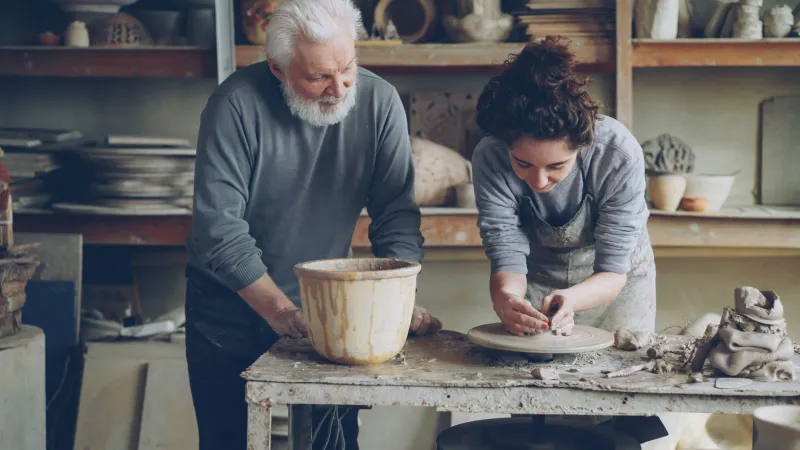
There is a particular kind of discovery that resists planning. A ceramicist in Albuquerque posts a time-lapse of her wheel-throwing process in a subreddit devoted to ASMR content. A muralist from Detroit shares a behind-the-scenes photo essay in a Discord server originally assembled for fans of a long-cancelled science fiction television series. A Brooklyn-based illustrator uploads her sketchbook pages to a forum populated almost entirely by competitive miniature painters. None of these artists arrived with a strategy. All of them found something they had not known to look for: an audience that was genuinely, almost ferociously, theirs.
This phenomenon—call it the accidental convergence—is reshaping how American artists understand community, validation, and the very purpose of sharing work. And its implications reach far beyond social media metrics.
The Failure of the Expected Channels
For decades, the path to audience-building in the American art world followed a recognizable map. You cultivated relationships with gallerists, submitted to juried exhibitions, built a presence on platforms designed explicitly for creative professionals, and hoped that critical attention would follow. That map has not become entirely obsolete, but for a growing number of working artists—particularly those operating outside major metropolitan art markets—it has proven frustratingly inadequate.
The platforms purpose-built for artists often replicate the hierarchies of the traditional art world rather than disrupting them. Follower counts become proxies for legitimacy. Algorithmic amplification rewards content that already performs well, creating feedback loops that favor the established over the emerging. Many artists report spending considerable energy performing visibility rather than cultivating genuine exchange.
The spaces where genuine discovery is now occurring frequently share one defining characteristic: they were never designed for art at all.
Niche Communities and the Quality of Attention
What distinguishes engagement in these unexpected digital corridors is not its volume but its texture. When a fiber artist shares her work in a community assembled around traditional textile history, she is not competing for attention against thousands of other visual artists. She is, instead, speaking directly to people whose existing passions have primed them to receive her work with unusual depth.
This specificity of context produces a quality of feedback that many artists describe as transformative. Members of a hobbyist community dedicated to historical reenactment, for instance, may bring to a costume illustrator's work a level of material and historical literacy that most general art audiences simply do not possess. The conversation that follows is not about whether the work is good in some abstract evaluative sense. It is about whether the stitching is accurate to the period, whether the dye colors reflect what would have been available, whether the silhouette honors the documented evidence. For an artist whose practice is rooted in historical research, this constitutes an entirely different—and considerably richer—form of creative dialogue.
Similar dynamics emerge across a remarkable range of communities. Game designers engaging with a concept artist's environmental work bring questions about spatial logic and narrative function. Amateur astronomers responding to a painter's celestial landscapes offer observational precision that reshapes how the artist thinks about light. Mycology enthusiasts drawn to a sculptor's fungal forms contribute taxonomic knowledge that opens new formal possibilities.
The Strategic Accident
As word of these convergences has spread, some artists have begun approaching them with greater intentionality—though the most effective practitioners are careful to preserve the authentic quality of participation that makes these spaces valuable in the first place.
The distinction matters enormously. Communities built around genuine shared interest are acutely sensitive to instrumental participation. An artist who arrives in a knitting forum with the transparent goal of promoting her textile work will be recognized and resisted. An artist who arrives because she is genuinely fascinated by the construction of traditional Scandinavian patterns, and who happens also to share her own work when it becomes relevant, is welcomed into something far more durable.
Several artists interviewed for this piece described a period of what they called "legitimate lurking"—months spent genuinely participating in communities adjacent to their practice before their identity as working artists became relevant to other members. This investment of authentic engagement, they report, yielded returns that no promotional strategy could replicate.
What Validation Looks Like Now
The deeper significance of this shift lies in what it reveals about changing conceptions of artistic legitimacy. For much of the twentieth century, American art culture organized itself around a relatively narrow set of validating institutions: the major museum, the prestigious gallery, the influential critic, the significant prize. These institutions still carry weight, but their monopoly on meaning-making has fractured considerably.
When a sculptor discovers that her work has generated a months-long conversation among a community of competitive aquarium designers—who have begun incorporating her formal vocabulary into their own practice—she has received a form of validation that no institutional imprimatur can fully replicate. It is validation grounded not in the judgment of professional taste-makers but in the lived responses of people whose engagement with the work is entirely voluntary and entirely genuine.
This is not to romanticize the phenomenon uncritically. Niche community validation carries its own limitations and distortions. The enthusiasms of a specialized group may not translate to broader audiences. Echo chambers form in digital communities as readily as anywhere else. An artist whose work resonates powerfully within a single niche may find herself creatively circumscribed by the expectations of that community over time.
But these are navigable complications, not disqualifying ones. The artists who are managing this terrain most thoughtfully treat unexpected community engagement as one source of creative nourishment among several—a complement to, rather than a replacement for, engagement with the broader art world.
A New Map for Creative Belonging
What emerges from these stories, taken together, is something more significant than a collection of charming anecdotes about artists who found their people in unlikely places. It is evidence of a fundamental reorganization of how creative community forms and sustains itself in contemporary American culture.
The old map assumed that artists and their audiences would find each other through dedicated cultural infrastructure—through institutions and platforms explicitly designed to mediate that encounter. The new territory suggests that the most vital encounters may occur precisely where no such mediation exists: in spaces where people have gathered around a shared passion and where an artist's work arrives not as art-world product to be evaluated but as a contribution to an ongoing conversation that already matters deeply to everyone present.
For cultural organizations committed to supporting creative life in all its dimensions, this development demands serious attention. The communities where American artists are finding their most engaged interlocutors are not waiting to be discovered by the art world. They are already fully alive, generating their own forms of meaning and exchange. The more interesting question is whether the art world is prepared to learn from what they have built.