Hidden in Plain Sight: The Secret Collaborations Quietly Transforming American Art
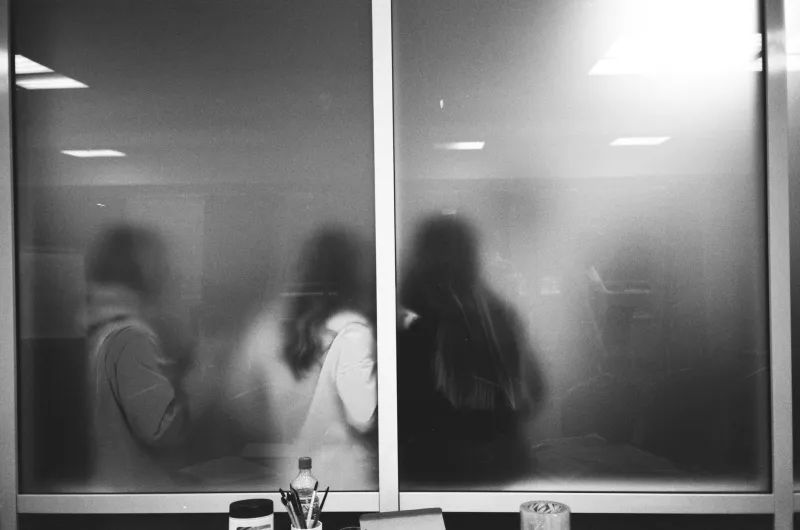
There is a particular kind of courage required to make something extraordinary and then refuse to sign your name to it. In an era defined by personal branding, curated social media presence, and the relentless commodification of the individual artist's identity, a quiet counter-movement is gathering force. Across disciplines — from experimental music and visual art to literary fiction and performance — creative partnerships are flourishing in deliberate anonymity, producing work of remarkable ambition that arrives before the public without the weight of reputation attached.
This is not obscurity born of failure. It is anonymity chosen as a creative instrument.
The Architecture of Deliberate Invisibility
To understand why accomplished artists would willingly surrender the recognition their careers have earned, one must first appreciate the peculiar tyranny of reputation in contemporary cultural life. When a well-known painter releases new work, critics and collectors arrive already armed with expectations forged by decades of prior output. Audiences approach the canvas not as an open question but as a continuation of a known story. The work is filtered, before it is even seen, through the amber of established narrative.
Anonymous collectives disrupt this entirely. When a body of work arrives without attribution — or under a pseudonym deliberately designed to signal nothing — the audience is left with only the work itself. This enforced neutrality, counterintuitively, creates a more demanding and more honest form of engagement.
Several American artist groups operating in this mode have described the experience of anonymity as liberating in ways that years of institutional support and critical acclaim never managed to be. The removal of the individual ego from the equation does not diminish the work; it concentrates it.
Music's Anonymous Vanguard
The recorded music landscape offers some of the most visible examples of this phenomenon. Unsigned and deliberately unattributed musical projects have proliferated across streaming platforms, where algorithmic discovery has made it possible for music to accumulate significant audiences without any conventional promotional infrastructure — and without any identifiable human face behind it.
Some of these projects are the work of solo artists seeking creative escape hatches from their primary careers. Others represent genuine multi-person collaborations in which the question of individual contribution is considered irrelevant, even antithetical, to the project's intent. What they share is a principled refusal to allow biography to become a lens through which the music is interpreted.
This approach carries particular resonance in communities where identity — race, gender, sexuality, class background — has historically been used to limit the critical seriousness with which work is received. By removing identifiable markers, some artists have found that their music is evaluated on terms they were never previously afforded. The paradox is pointed: invisibility, for certain artists, constitutes a form of equity.
Visual Art's Untraceable Movements
In the visual arts, anonymous collaboration takes on additional complexity. The art market's dependence on provenance, attribution, and the authenticated biography of the maker means that unsigned or collectively produced work occupies genuinely radical territory. A painting without a known author is, within conventional market logic, a painting without value — which is precisely why some artists find the gesture so compelling.
Untraceable visual art movements have surfaced in cities including New York, Los Angeles, Chicago, and Philadelphia, producing bodies of work that circulate through galleries, public spaces, and online archives under collective pseudonyms or no name at all. Critics have found themselves in the unfamiliar position of having to assess work without the usual scaffolding of artist biography, exhibition history, or institutional affiliation.
The results have been instructive. Some work that might have been dismissed as the product of emerging, insufficiently credentialed artists has received serious critical engagement precisely because reviewers could not know whom they were dismissing. Conversely, some work that might have been elevated on the strength of its maker's reputation has been met with more measured responses when that reputation was withheld.
The Question of Trust Within the Partnership
For all its creative advantages, anonymous collaboration places extraordinary demands on the individuals involved. When credit cannot be claimed publicly, the internal architecture of the partnership must be built on foundations of trust that conventional creative arrangements rarely require.
Artists who have participated in such arrangements describe a necessary renegotiation of ego — not its elimination, but its redirection. The satisfaction that ordinarily derives from public recognition must be replaced by something more internal: the knowledge of what one has contributed, and the shared conviction that the work itself justifies the sacrifice of visibility.
This is not a model suited to all temperaments, nor should it be presented as inherently superior to credited collaboration. But for those who have found their way into it, the discipline it imposes appears to produce a particular quality of creative commitment. When there is no external reward available, the only remaining motivation is the work.
Audiences in the Dark — and What They Find There
Perhaps the most revealing dimension of this phenomenon is what it discloses about audiences themselves. When work arrives without the contextual cues that ordinarily guide reception — the artist's name, their demographic identity, their institutional affiliations, their critical history — audiences are required to develop their own interpretive frameworks from scratch.
This can be disorienting. American cultural life has grown accustomed to the comfort of known quantities, to the reliable pleasures of following an artist's development across a career, to the social legibility that comes with being able to say who made something and why that matters. Anonymous work refuses all of this.
But the disorientation, for many audiences, gives way to something more valuable: a more direct and less mediated encounter with the work on its own terms. Without the biography to explain the painting, the painting must explain itself. Without the artist's public persona to animate the music, the music must animate the listener. This is, in many respects, what art has always aspired to accomplish — and what the machinery of contemporary cultural celebrity has made increasingly difficult to achieve.
A Permanent Practice or a Passing Experiment?
It would be premature to declare anonymous collaboration a defining movement of this cultural moment. Some of what passes for principled anonymity is undoubtedly strategic mystique — a marketing posture dressed in the language of artistic integrity. The history of art is not without its calculated enigmas.
But the breadth and seriousness of the current phenomenon suggests something more substantial than trend. At a moment when the attention economy has made personal brand a survival imperative for working artists, the deliberate refusal of visibility constitutes a genuine act of cultural resistance. It insists that the work can speak — that it must speak — without the amplification of the maker's name.
For Luisa Futoransky Arts, this is a development worth watching with care and genuine curiosity. The questions it raises — about authorship, merit, community, and the terms on which art is allowed to matter — are among the most important questions the cultural landscape currently faces. And they are being asked, with admirable seriousness, by artists who have chosen, for now, to remain unnamed.