Algorithm as Gatekeeper: How Digital Feeds Are Transforming the Ancient Art of Mentorship
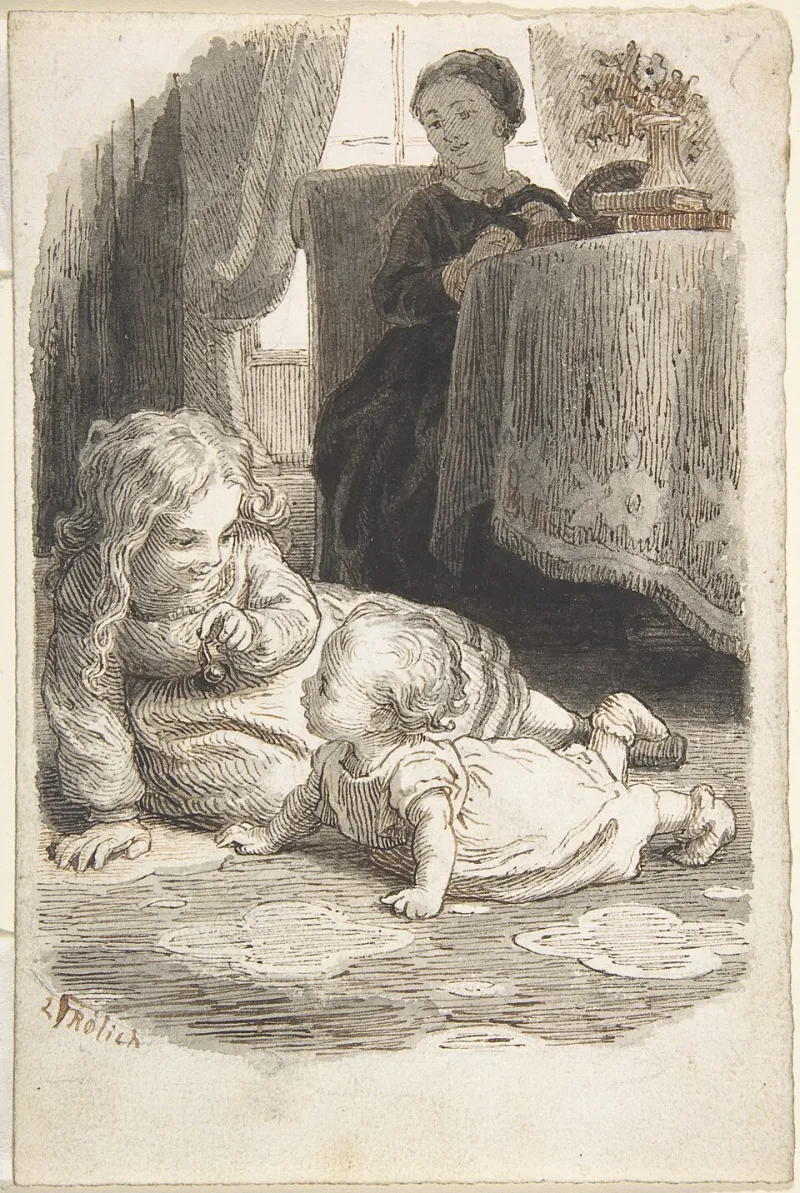
Photo: Lorenz Frølich, CC0, via Wikimedia Commons
For centuries, the path from emerging artist to master practitioner ran through studios, conservatories, and carefully curated apprenticeships. Today, that path is increasingly mediated by an algorithm — and the implications for creative education are profound, complicated, and far from settled.
In cities like Chicago, Portland, and Atlanta, a new generation of visual artists, musicians, and performers is coming of age having never set foot in a traditional mentorship arrangement. Instead, their formative creative education has unfolded through Instagram Reels, TikTok tutorials, and YouTube deep-dives — curated not by a wise teacher, but by a recommendation engine optimized for engagement. The question now pressing itself upon the American arts community is not simply whether this constitutes real learning, but who benefits, who is left behind, and what is irretrievably lost.
The Feed as Faculty
There is something genuinely remarkable about what digital platforms have made possible. A nineteen-year-old ceramicist in rural Mississippi can now observe the hand movements of a celebrated Oaxacan potter, absorb the color philosophy of a Brooklyn-based painter with forty years of practice, and follow the compositional thinking of a Tokyo-trained printmaker — all within a single afternoon. Access to creative mastery, once dictated by geography, class, and institutional affiliation, has been partially democratized in ways that would have seemed fantastical a generation ago.
Marceline Okafor, a twenty-four-year-old textile artist based in Detroit, credits her entire technical foundation to a constellation of online creators she began following at sixteen. "I grew up in a neighborhood where there was no art program, no gallery, nothing," she says. "The internet was my MFA. I watched the same videos hundreds of times. I absorbed those artists' sensibilities so deeply that I can still hear their voices when I'm working." Okafor has since developed her own following, completing a residency at a Detroit-based arts collective and exhibiting regionally. By conventional metrics, the system worked.
Yet the system is not neutral. Algorithms do not surface artists equitably — they amplify creators who already possess the resources to produce high-quality content consistently: professional lighting, editing software, time unburdened by financial precarity. The result is that the "masters" most visible to emerging artists online are frequently those who are digitally fluent and economically comfortable, not necessarily those whose work is most challenging, most rigorous, or most culturally significant.
Parasocial Learning and Its Discontents
There is another dimension to this shift that the arts community has been slower to reckon with: the psychological texture of learning from someone who does not know you exist.
Traditional mentorship is reciprocal. The student is seen, assessed, corrected, and encouraged by a teacher who bears some responsibility for their development. The relationship carries weight on both sides. Digital discipleship, by contrast, is fundamentally asymmetrical. The emerging artist may feel profound intimacy with an established figure — may internalize their philosophy, mimic their process, even feel genuine grief when that creator goes offline — while the established artist remains entirely unaware of their existence.
Jordan Whitfield, a thirty-one-year-old sound artist and educator based in Philadelphia, has thought carefully about this dynamic. "I've had students come to me having spent years learning from someone online, and they have this very specific relationship to that person's work — almost devotional," he observes. "But when I ask them to push against it, to critique it, to develop their own position, they struggle. The parasocial relationship doesn't give you the tools to disagree with your teacher. Real mentorship does."
This is not a small concern. The capacity to resist, argue with, and ultimately transcend one's influences is central to artistic development. A model of creative education that produces fluent imitators but inhibits genuine creative independence represents a significant failure, regardless of how democratically it distributes access.
When the Digital Becomes Real
It would be a mistake, however, to frame this story as a simple cautionary tale. Across the country, artists are finding ways to transform digital proximity into genuine creative relationship — and the results are instructive.
Sophia Delacroix, a painter and muralist based in New Orleans, began following the work of a celebrated Chicago-based abstract painter through Instagram in 2018. Over the following year, she engaged consistently and thoughtfully with his posts — not with flattery, but with substantive observations and questions. He noticed. A direct message exchange evolved into a phone call, then a studio visit, and eventually a formal mentorship that has shaped the last four years of her practice. "The platform was the introduction," she says. "But the relationship was built the old-fashioned way — through genuine intellectual engagement and showing up."
Delacroix's experience suggests that digital platforms, at their best, function not as replacements for traditional mentorship but as expanded antechambers to it — spaces where emerging artists can demonstrate their seriousness and earn the attention of established figures who might otherwise be entirely inaccessible.
Structural Questions the Arts Community Must Answer
What remains troubling is the degree to which this expanded antechamber still rewards certain kinds of visibility over others. Artists who are photogenic, articulate on camera, and comfortable with self-promotion will find it easier to attract mentors' attention online than those whose gifts are subtler, whose work resists easy documentation, or whose cultural context is underrepresented in algorithmic ecosystems.
Arts institutions have a responsibility here that many have not yet fully assumed. Residency programs, conservatories, and cultural organizations invested in genuine equity must actively create mentorship pathways that do not depend on an emerging artist's social media profile. The algorithm, left to its own logic, will reproduce existing hierarchies in new formats.
At the same time, dismissing digital mentorship entirely — retreating to a romanticized vision of the studio apprenticeship available only to the well-connected few — would be its own form of gatekeeping. The task is more nuanced: to preserve what was most valuable in traditional mentorship (reciprocity, accountability, the productive friction of genuine disagreement) while embracing the genuinely expanded access that digital platforms have made possible.
The invisible apprentice watching a master work from a thousand miles away deserves both the access the internet has granted and the reciprocal relationship that access alone cannot provide. Building the structures to honor both demands is among the most urgent tasks facing the American arts community today.