Turning Down the Volume: How Museums Are Reimagining the Cultural Visit for Sensory-Sensitive Audiences

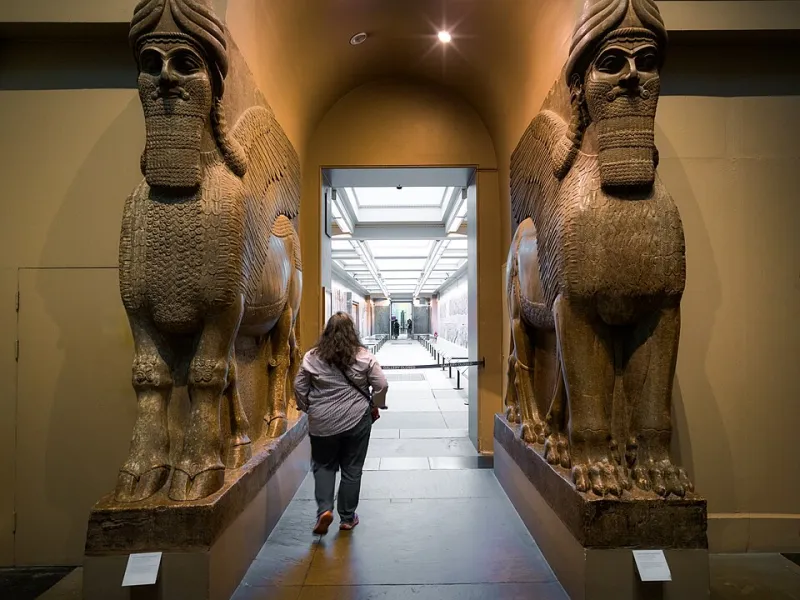
Photo: Richard Wane, Public domain, via Wikimedia Commons
For decades, the American museum experience has been defined by a particular sensory signature — the echoing footsteps across marble floors, the ambient murmur of school groups navigating gallery corridors, the occasional burst of recorded audio drifting from a multimedia installation. For many visitors, these textures form a rich backdrop to cultural discovery. For others — those with autism spectrum disorder, sensory processing differences, anxiety disorders, PTSD, or chronic migraines — they constitute a formidable barrier to participation.
That barrier is now, slowly but meaningfully, beginning to come down.
Across the United States, an expanding cohort of museums, performing arts centers, and cultural institutions has begun implementing what the field broadly calls "sensory-friendly" programming: dedicated hours or events during which lighting is softened, ambient noise is reduced, crowds are intentionally limited, and staff are trained in inclusive engagement practices. What began as a modest accommodation effort has evolved into a genuine philosophical reckoning with who cultural spaces are designed to serve — and who has been quietly left out.
A Movement With Deep Roots
The origins of sensory-friendly museum programming are often traced to partnerships between cultural institutions and disability advocacy organizations in the early 2010s. The Museum of Modern Art in New York was among the first major institutions to pilot what it called "Mornings at MoMA" — early-access sessions designed specifically for visitors with dementia and their caregivers, later expanded to include individuals with autism and other sensory sensitivities. The model attracted significant attention and inspired replication across the country.
Today, institutions ranging from the Field Museum in Chicago to the Smithsonian's National Museum of Natural History in Washington, D.C., to the Los Angeles County Museum of Art have developed their own iterations of sensory-conscious programming. The approaches vary considerably — some institutions offer monthly quiet mornings, others host annual sensory-friendly nights — but the underlying commitment is consistent: to create conditions in which visitors who have historically found cultural spaces overwhelming can engage with art, history, and performance on their own terms.
Accessibility advocates emphasize that the stakes extend well beyond individual comfort. "When we design cultural spaces that exclude certain neurological profiles, we are making a statement about whose experience of culture is considered legitimate," says one prominent disability rights consultant who has advised several Northeastern institutions on inclusive design. "Sensory-friendly programming is not a peripheral amenity. It is a corrective to decades of institutional exclusion."
What Sensory-Friendly Actually Looks Like
The practical implementation of these programs is more nuanced — and more resource-intensive — than a simple scheduling adjustment might suggest. At its most comprehensive, a sensory-friendly museum hour involves a layered set of modifications that touch nearly every aspect of the visitor experience.
Lighting adjustments are among the most common interventions. Many institutions dim overhead fluorescents, eliminate or reduce strobe effects in digital installations, and increase the use of warm, diffuse light sources. Sound management is equally critical: recorded audio guides and multimedia displays are often muted or made available exclusively through personal headphones, ambient music is eliminated entirely, and staff are briefed to speak softly and avoid sudden announcements over public address systems.
Crowd control measures add another dimension. Institutions typically cap attendance at sensory-friendly sessions far below standard capacity, reducing the unpredictability of navigating dense social environments. Some museums provide advance visual guides — detailed maps and photo walkthroughs of gallery spaces — so that visitors can familiarize themselves with the physical environment before arrival, reducing the anxiety of the unknown.
For performing arts organizations, the adaptations extend further still. Sensory-friendly theatrical performances — now offered by companies including the Brooklyn Academy of Music and various regional theater organizations — often permit audience members to move freely during the performance, provide quiet rooms adjacent to the main hall where overwhelmed attendees can decompress, and eliminate the pressure of maintaining conventional audience comportment. The experience of art, in these contexts, is deliberately decoupled from the social performance of attending art.
The Logistical Realities
For all of their promise, sensory-friendly programs present genuine operational challenges that institutions must navigate thoughtfully. Staff training is among the most significant investments required. Front-line museum employees — security personnel, docents, visitor services staff — must be equipped not only with factual knowledge about sensory sensitivities but with the interpersonal skills to respond calmly and helpfully to a wide range of visitor needs. This training is neither inexpensive nor instantaneous.
Technology also presents complications. Many contemporary art installations are fundamentally defined by their sensory intensity — immersive projection environments, sound-based sculptures, interactive digital works. Adapting these pieces for sensory-friendly programming without compromising their artistic integrity requires close collaboration between curators, artists, and accessibility coordinators. In some cases, it requires renegotiating the terms of an artwork's presentation with the artist themselves.
Funding remains a persistent constraint. While federal and state accessibility mandates provide a legal baseline, the resources required to implement robust sensory-friendly programming often exceed what compliance alone demands. Many institutions rely on philanthropic support, grants from disability-focused foundations, and community partnerships to sustain these efforts — a model that, while effective, raises questions about long-term institutional commitment when external funding fluctuates.
Toward a New Standard
Perhaps the most significant question animating this movement is whether sensory-friendly programming will remain a specialized offering or evolve into a foundational expectation of cultural institutions across the United States.
There are encouraging signs. The American Alliance of Museums has increasingly incorporated accessibility — including sensory accessibility — into its accreditation standards and professional development programming. A growing body of research documents not only the social benefits of inclusive design but the economic case: neurodivergent visitors and their families represent a substantial and underserved audience whose engagement translates directly into institutional revenue and community trust.
More fundamentally, advocates argue that the design principles underlying sensory-friendly programming — reduced stimulation, predictability, flexibility, and genuine attentiveness to diverse visitor needs — improve the experience for virtually everyone who walks through a museum's doors. A quieter, less crowded gallery is simply a better gallery, for a far wider range of people than the label "sensory-friendly" might initially suggest.
At Luisa Futoransky Arts, we believe that the measure of a cultural institution's vitality lies not only in the ambition of its collections or the prestige of its programming, but in the breadth of its welcome. The museums that are turning down the volume are not diminishing the cultural experience. They are expanding it — and in doing so, they are writing a more honest story about what American culture can aspire to be.