From the Margins to the Center: How Grassroots Creative Networks Are Rewriting the Rules of Cultural Power

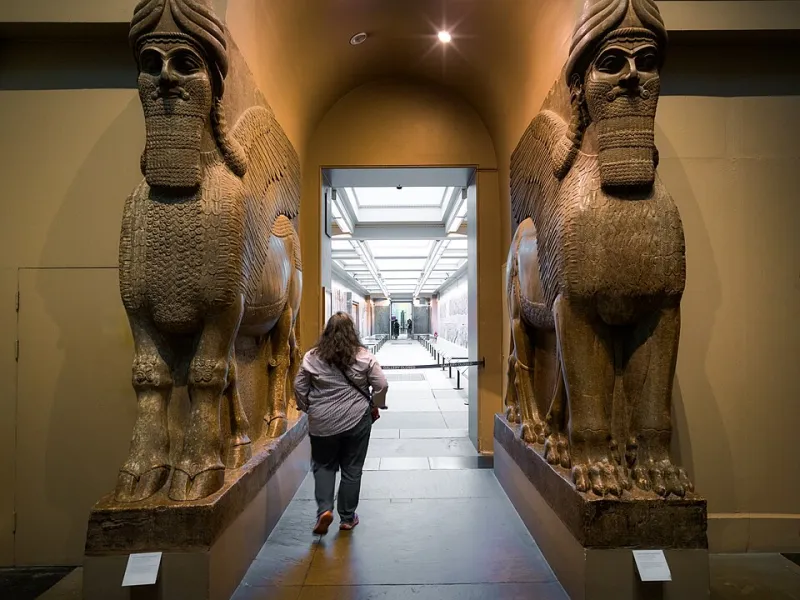
Photo: Denis Probst, CC BY-SA 3.0 lu, via Wikimedia Commons
The traditional narrative of artistic ascent in America has long followed a familiar script: an artist produces work, submits it to the judgment of curators and critics, earns institutional validation, and is thereby granted access to audiences, resources, and recognition. For much of the twentieth century, this pipeline — however imperfect and inequitable — functioned as the primary mechanism through which cultural value was assigned and distributed.
That pipeline is cracking. And what is flowing through the fractures is something considerably more interesting.
Across the country, from the post-industrial neighborhoods of Cleveland to the dense creative ecosystems of Brooklyn and the sun-baked corridors of East Los Angeles, grassroots artist networks are building alternative infrastructures that do not merely exist alongside the institutional mainstream — they are increasingly defining the terms by which the mainstream must operate.
What "Underground" Actually Means Now
The word "underground" carries romantic connotations that can obscure the practical reality of what these communities are doing. They are not simply countercultural gestures or aesthetic rebellions. They are organizational experiments — in some cases quite sophisticated ones — that have developed functioning models for artist support, audience development, peer critique, and resource distribution without relying on the approval of established institutions.
In Detroit, a network of artist-run spaces that emerged from the city's long economic reckoning has developed a mutual aid model in which member collectives share not only exhibition space but legal resources, equipment, and grant-writing expertise. What began as informal cooperation among a handful of studios has grown into a structured network that now serves dozens of artists and regularly attracts the attention of national foundations curious about replicable models of community-based arts support.
In Houston, a group of Latinx performers and visual artists formed a collective specifically to address what they identified as the systematic underrepresentation of their communities in the city's major cultural institutions. Rather than lobbying those institutions directly — a strategy they had tried and found exhausting — they built their own programming infrastructure, complete with an annual festival, a youth mentorship pipeline, and a rotating residency program funded through a combination of crowdsourcing, local business partnerships, and small foundation grants. The institutions eventually came to them.
The Funding Question, Answered Differently
One of the most significant contributions these underground networks have made to the broader cultural ecosystem is their experimentation with alternative funding models. The conventional grant economy — in which artists compete individually for limited institutional dollars — has been widely criticized for replicating existing hierarchies and favoring those with the social capital and administrative infrastructure to navigate complex application processes.
Several grassroots collectives have responded by developing peer-directed funding mechanisms that redistribute decision-making power to the communities most affected by arts funding decisions. In this model, artists themselves — rather than foundation program officers or museum trustees — evaluate proposals, allocate resources, and set priorities. The results have been striking: funding tends to flow toward work that reflects genuine community need rather than institutional trend-chasing, and the process builds organizational capacity within communities that have historically been treated as grant recipients rather than cultural decision-makers.
This approach has not gone unnoticed by the philanthropic sector. A growing number of major arts funders, including several prominent national foundations, have begun to adapt their own grantmaking practices in response to the model these collectives have demonstrated — incorporating participatory review processes, reducing administrative barriers, and in some cases ceding curatorial authority to community-based advisory bodies.
Mentorship Without Hierarchy
Another defining characteristic of these alternative networks is the way they approach mentorship — not as a transaction between established practitioners and emerging talent, but as an ongoing, reciprocal exchange across experience levels.
In the conventional art world, mentorship tends to be informal, access-dependent, and frequently inequitable — most available to those who already have connections to institutional spaces. The collectives profiled here have developed more intentional, structured approaches: peer cohorts that meet regularly, intergenerational working groups that pair artists at different career stages around shared projects, and open critique sessions that emphasize collective learning over individual advancement.
An artist-run space in Chicago's South Side has made this kind of lateral mentorship central to its programming philosophy. Rather than organizing events around the presentation of finished work to passive audiences, the space hosts extended working sessions in which artists at various stages of their practice develop projects together in public, making the process of creation — with all its uncertainty and revision — as visible as the product.
Pressure on the Establishment
The influence of these grassroots networks on mainstream cultural institutions has become increasingly difficult to ignore. Several major American museums have, in recent years, made significant programmatic and curatorial shifts that bear the unmistakable imprint of pressure from below — not from individual artists lobbying for inclusion, but from organized communities with the infrastructure and credibility to make credible demands.
This pressure has taken multiple forms. Some collectives have engaged directly with institutions through public dialogue, community forums, and formal partnership proposals. Others have simply made the contrast between their own inclusive, community-responsive practices and the institutions' more hierarchical models so visible that the institutions have been compelled to respond.
The results are uneven. Some institutions have responded with genuine structural change — revising acquisition policies, diversifying leadership, redesigning programming to center communities previously treated as peripheral. Others have responded with what critics describe as performative gestures: temporary exhibitions, one-time community events, and diversity statements that leave underlying power structures intact.
The collectives themselves tend to be clear-eyed about the distinction. They have built enough institutional memory — and enough organizational independence — to evaluate these responses critically and hold institutions accountable over time.
A New Cultural Geography
What is perhaps most significant about this moment is the geographic breadth of the phenomenon. The narrative of American cultural life has long been organized around a handful of major metropolitan centers — New York above all, with Los Angeles and Chicago as secondary poles. The grassroots networks reshaping the field are distributed far more widely: in mid-sized cities with strong industrial or immigrant histories, in college towns with surplus creative energy, in rural communities where artists have built something from genuine scarcity.
This dispersal matters. It suggests that what is happening is not a localized disruption but a structural shift in how cultural authority is being claimed and exercised across the country.
At Luisa Futoransky Arts, we understand creativity as something that flourishes most fully when it is rooted in genuine community — when it grows from the ground up rather than being handed down from above. The collectives and networks described here are not simply alternatives to the mainstream. They are, increasingly, its future — and the institutions that recognize this earliest will be the ones best positioned to remain relevant in the cultural landscape that is already taking shape.